



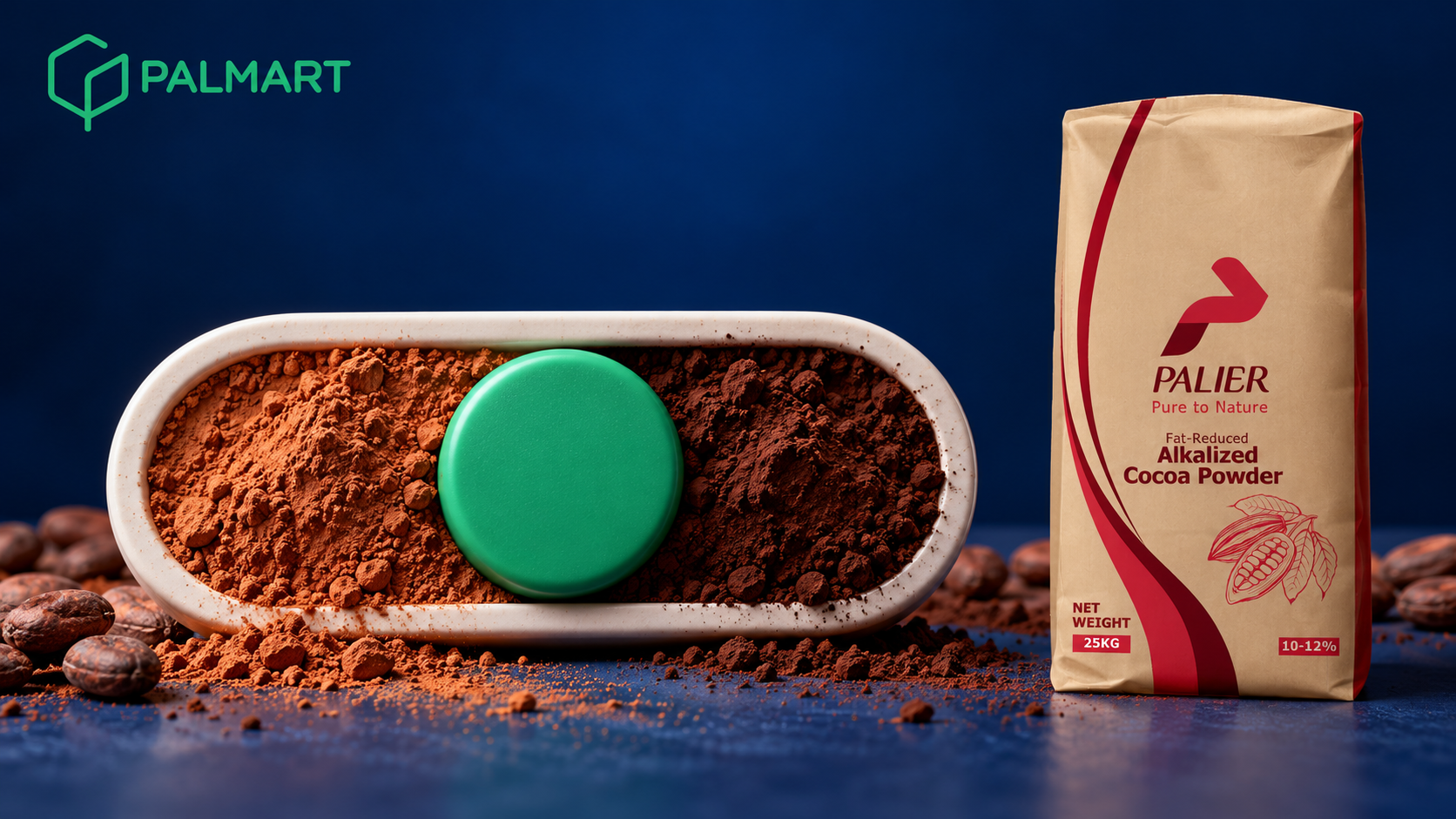
Your phone has a dark mode. Cocoa has a processing step that can make the colour change just as noticeable: alkalization.
Cocoa alkalization, also called Dutch processing, treats cocoa material with a food-grade alkali. It raises pH, reduces natural acidity and changes the colour and flavour profile. That makes it relevant to the person choosing a cocoa powder for a biscuit, beverage, filling or frozen dessert.
The useful question is what that change will do in your recipe. A dramatic shade in a sample bag is only the start of the conversation.
What actually happens during cocoa alkalization?
During alkalization, cocoa material is treated with an alkaline solution; potassium carbonate is one commonly used alkali. The treatment changes the material’s acidity and its sensory characteristics. Callebaut’s explanation of alkalized and natural cocoa describes how this also affects colour, wettability and dispersibility.
The treatment can take place at different stages. The International Cocoa Organization’s processing overview identifies cocoa nibs, cocoa liquor and cocoa cake as possible starting materials. A simplified bean-to-powder diagram therefore needs room for different manufacturing routes.
“Dutch processed” names a treatment. It does not identify a single shade, fat content or application result. Ask for the offered grade’s specification when comparing powders.
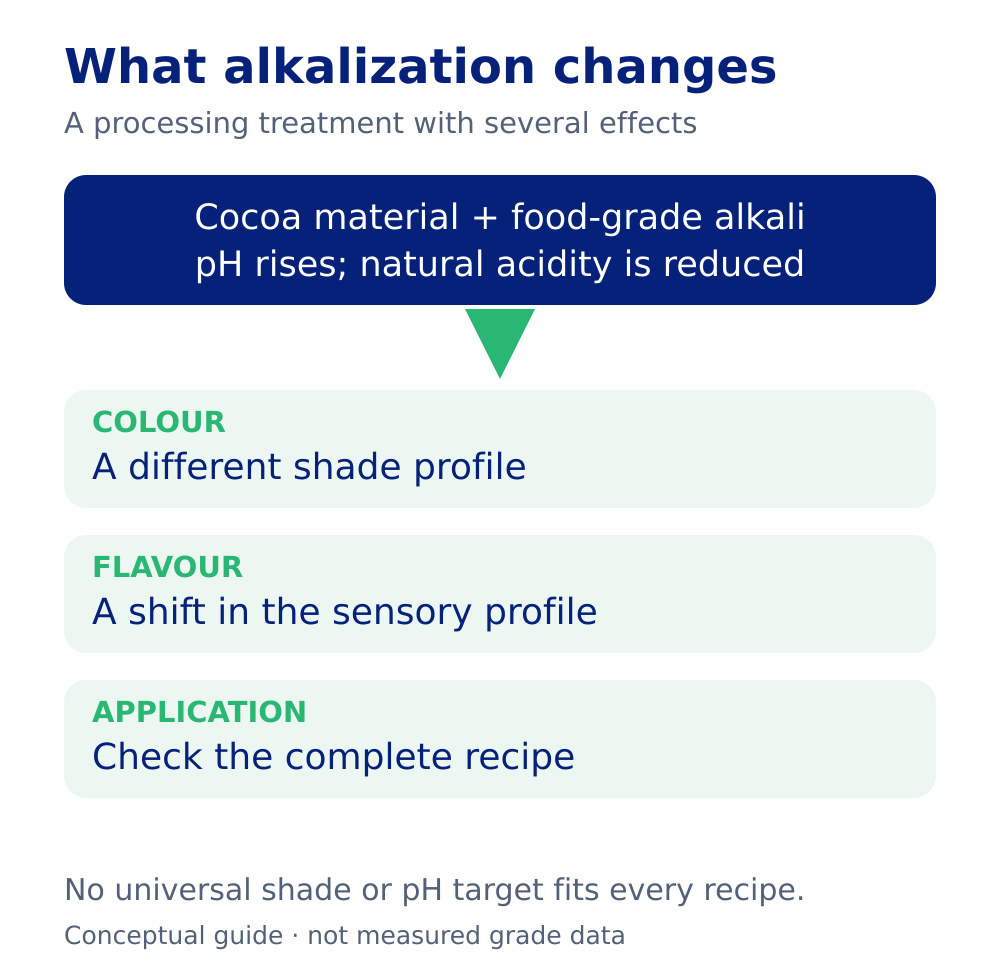
Three things change when cocoa goes into “dark mode”
1. Colour: the powder and the finished product tell different stories
Alkalization can develop deeper brown and reddish tones, with more intensive treatments also used for very dark powders. The finished shade still needs checking in the product you are making.
A cocoa powder has a dry appearance and an appearance after it is incorporated into another medium. Milk, cream, water and fat change the setting in which its colour is seen. Guittard’s technical discussion of cocoa powders also explains that cocoa butter content can affect the relationship between dry and application colour.
For sample approval, compare the finished biscuit, filling or beverage under consistent lighting. Keep the dry sample as a reference, and record the cocoa code used in each trial. This makes “the brown we approved” a traceable choice.
2. Flavour: write down the profile you want
Alkalization reduces acidity and shifts the flavour profile. Describe the target in sensory terms that the team can assess: acidity, roasted character, cocoa character, bitterness and aftertaste. These are separate observations, even when a sample looks impressively dark.
deZaan’s application guidance recommends evaluating flavour in a recipe. For a manufacturer, that means tasting the complete system: its cocoa dose, sweetness, dairy or fat ingredients, and processing conditions.
Before the trial, agree what a successful result would taste like. A purchasing brief that says “deep brown, low perceived acidity, suited to our filling” gives the evaluation a clearer destination than “strong cocoa”.
3. Acidity: the recipe may notice the switch
In baking, cocoa’s acidity can contribute to the reaction with baking soda. Replacing natural cocoa with an alkalized powder changes that contribution. Other acids and the complete leavening system determine how much the substitution matters. King Arthur Baking’s substitution tests illustrate why colour, flavour and rise should be reviewed together.
A useful factory trial keeps the original formula as a benchmark, then records any deliberate adjustment separately. That lets the team distinguish a cocoa substitution from a reformulation.
What should a manufacturer check in each application?
Cocoa also participates in texture and mixing. Callebaut’s notes on water absorption, fineness and dispersibility describe additional properties that matter alongside alkalinity. Use the following table to turn a colour-led conversation into a practical trial brief.
| Application | Question for the trial | Observation to record |
|---|---|---|
| Biscuits, cakes and brownies | How does the proposed cocoa work with the formula’s water and leavening balance? | Finished colour, flavour, shape or rise, and texture against the approved reference. |
| Chocolate-flavoured beverages | How does it wet and disperse under the actual mixing process? | Addition order, mixing conditions, visible particles, flavour and appearance at agreed observation times. |
| Ice cream and dairy desserts | What profile appears in the complete dairy or non-dairy base? | Colour, cocoa character and texture at the intended serving condition. |
| Fillings, creams and spreads | Does the sample meet the target in the actual fat-and-sugar system? | Appearance, aftertaste and texture using the production-relevant recipe and process. |
For a beverage, a quick mix in a cup is an initial observation. Approval should use the defined process and appropriate storage checks for that product. Improved initial dispersion alone does not establish finished-drink stability.
A fair cocoa comparison starts before the samples arrive
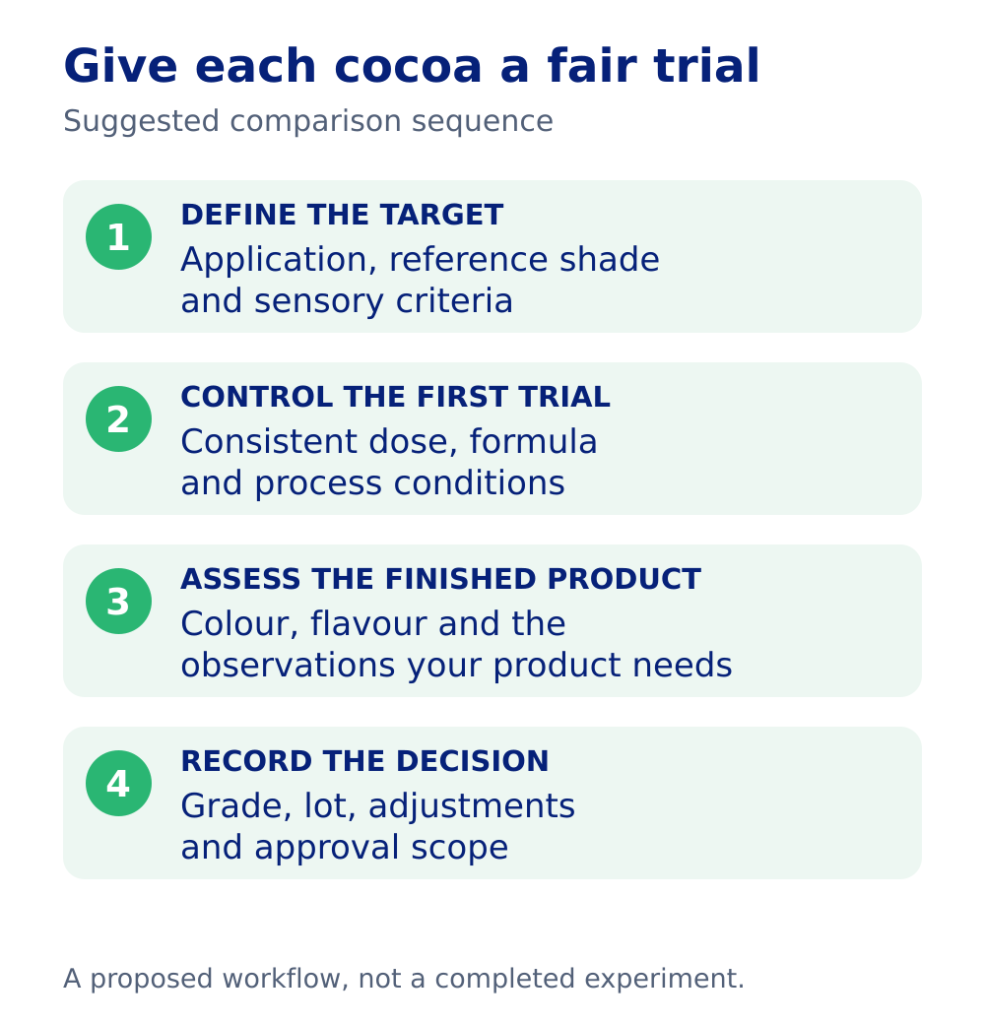
Use a short, agreed evaluation sequence:
- Define the target. Name the application, required shade, sensory profile and current reference.
- Prepare a controlled first comparison. Keep cocoa dose, formula, equipment and process conditions consistent. Identify each sample with its grade and lot.
- Assess the finished product. Record colour, flavour and the application-specific observations separately. Use agreed preparation and assessment times.
- Document any adjustment. If water, leavening or another ingredient changes, treat that as a separate trial and record why it was needed.
- Record the approval scope. State which grade, formulation and process the result supports, with the responsible team’s decision.
For the range discussion, see Palmart’s cocoa powder portfolio. Use the portfolio to shortlist profiles, then use the trial to decide which one belongs in your product.
Questions buyers ask about alkalized cocoa
Is Dutch-processed cocoa the same as alkalized cocoa?
Yes. Dutch processing and alkalization refer to the same type of treatment. The terms alone do not specify the powder’s exact pH, fat content, shade or performance.
Does darker cocoa always mean stronger chocolate flavour?
Colour alone cannot settle the choice. Record colour and flavour separately, and assess both in the intended recipe. The application medium and cocoa butter content can also affect the appearance you see.
Can I replace natural cocoa with alkalized cocoa at the same dose?
A same-dose comparison is a useful starting trial. The acceptable substitution depends on the full formulation, including other acids, leavening, water balance and the target sensory result. Validate the finished product before approving the change.
Find the cocoa profile for your next product
Explore Palmart’s alkalized cocoa powder page, then contact Palmart with your ingredient and grade requirements, application, target colour and flavour, expected volume and delivery destination. Ask which specifications, current documents and sample options are available for the proposed grade.
Dark mode makes a good opening. The right recipe gives it a purpose.
