


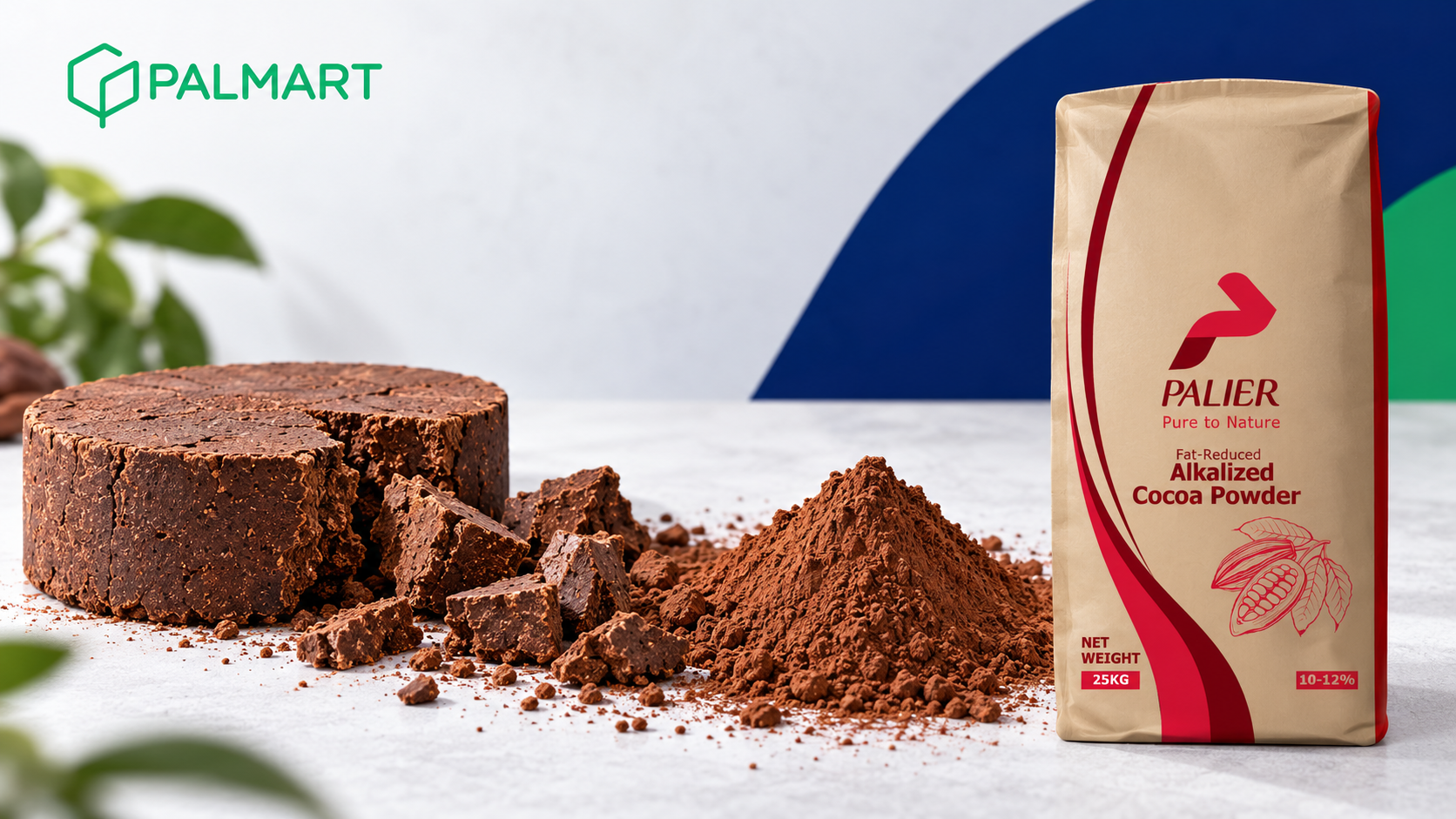
There is a cake in cocoa powder’s manufacturing story. It gets no candles, icing or trip through a pastry oven.
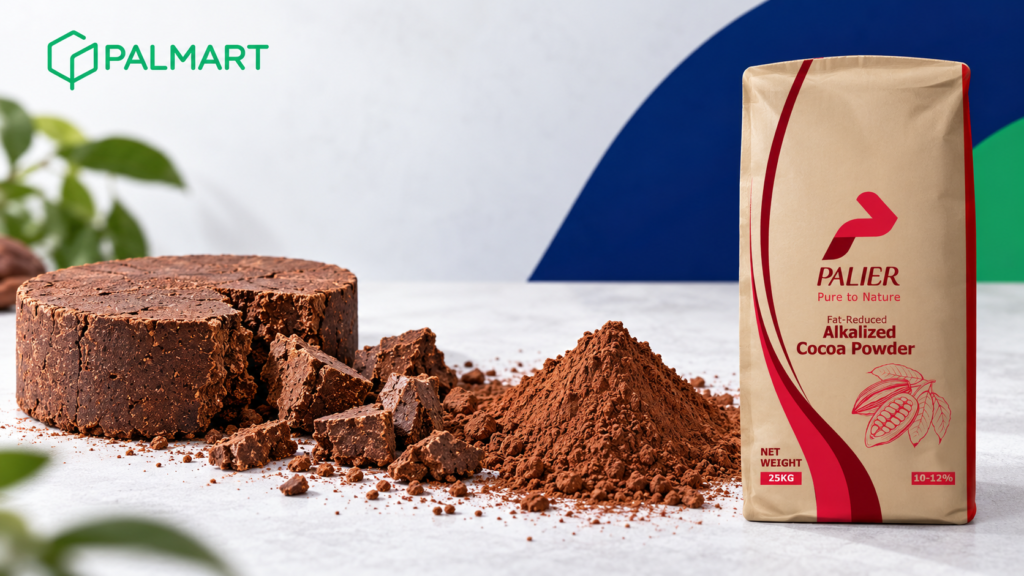
Cocoa press cake is the compact cocoa material left after cocoa liquor, also called cocoa mass, is pressed to separate out cocoa butter. The cake is broken down and milled as part of making cocoa powder.
That is the reveal behind “your cocoa was a cake first”. It also explains why two powders can have different fat contents and processing characteristics, even when both arrive in a familiar brown bag.
What is cocoa press cake?
Cocoa press cake is an intermediate in cocoa processing. When a press separates cocoa liquor into cocoa butter and the remaining cocoa material, the retained material forms the cake. ofi’s cocoa processing journey describes this separation and the subsequent conversion of cake into powder.
The name describes its compact form. Its next manufacturing job is to become an ingredient that can be measured, mixed and used in a recipe.
Some cocoa butter remains in the cake and therefore in the powder made from it. This residual fat is one of the characteristics that distinguishes cocoa powder grades. It is worth keeping that connection in mind when reading a specification.
From cocoa mass to cocoa powder: follow the two streams
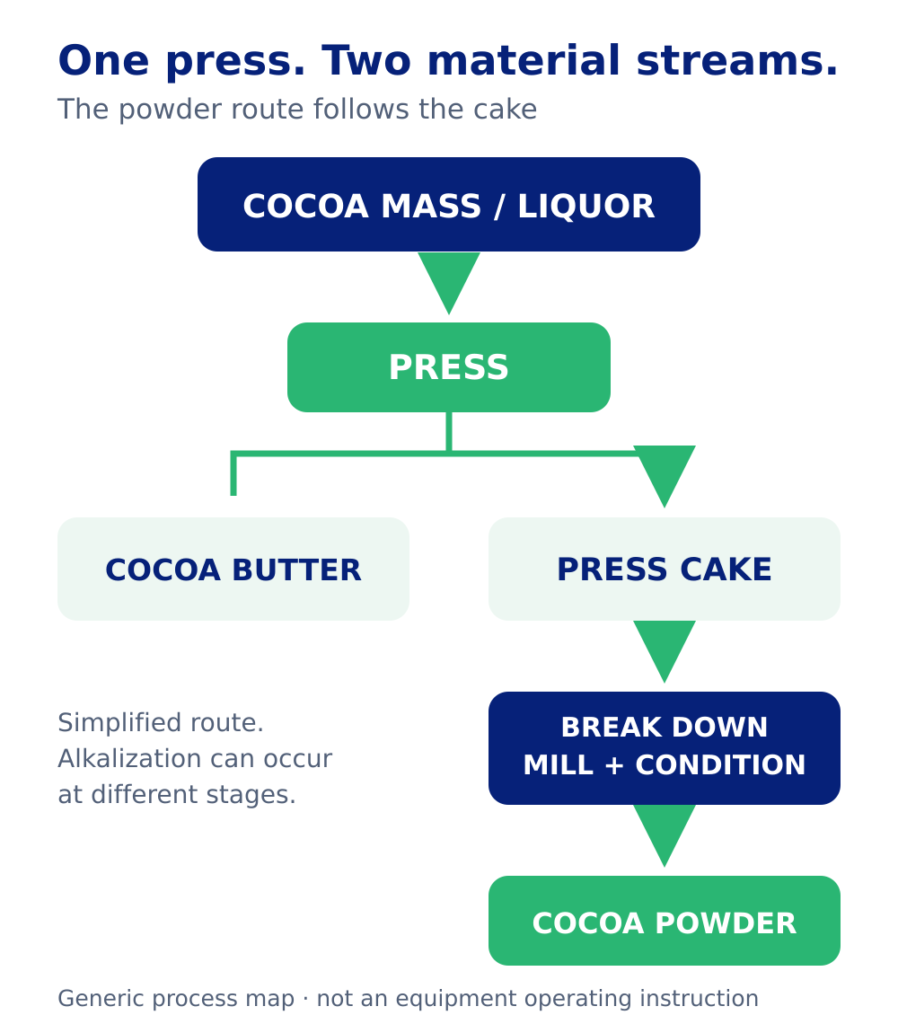
Roasted cocoa nibs are ground into cocoa mass, a thick paste also known as cocoa liquor. Pressing then creates two material streams: cocoa butter and cocoa cake. The powder journey follows the cake stream.
A simplified route looks like this:
- Cocoa mass enters the pressing stage. This is the material from ground cocoa nibs.
- Cocoa butter is separated. The retained cocoa material forms the press cake.
- The cake is broken down. Processing prepares the compact material for the powder-making system.
- Milling and finishing produce powder. Cooling and conditioning are also part of controlling the final powder’s handling characteristics.
The International Cocoa Organization’s processing description explains the cake-breaking, milling, cooling and tempering stages. Individual equipment arrangements and treatment sequences differ, so this is a route map rather than an operating instruction.
What the cake stage explains about your cocoa specification
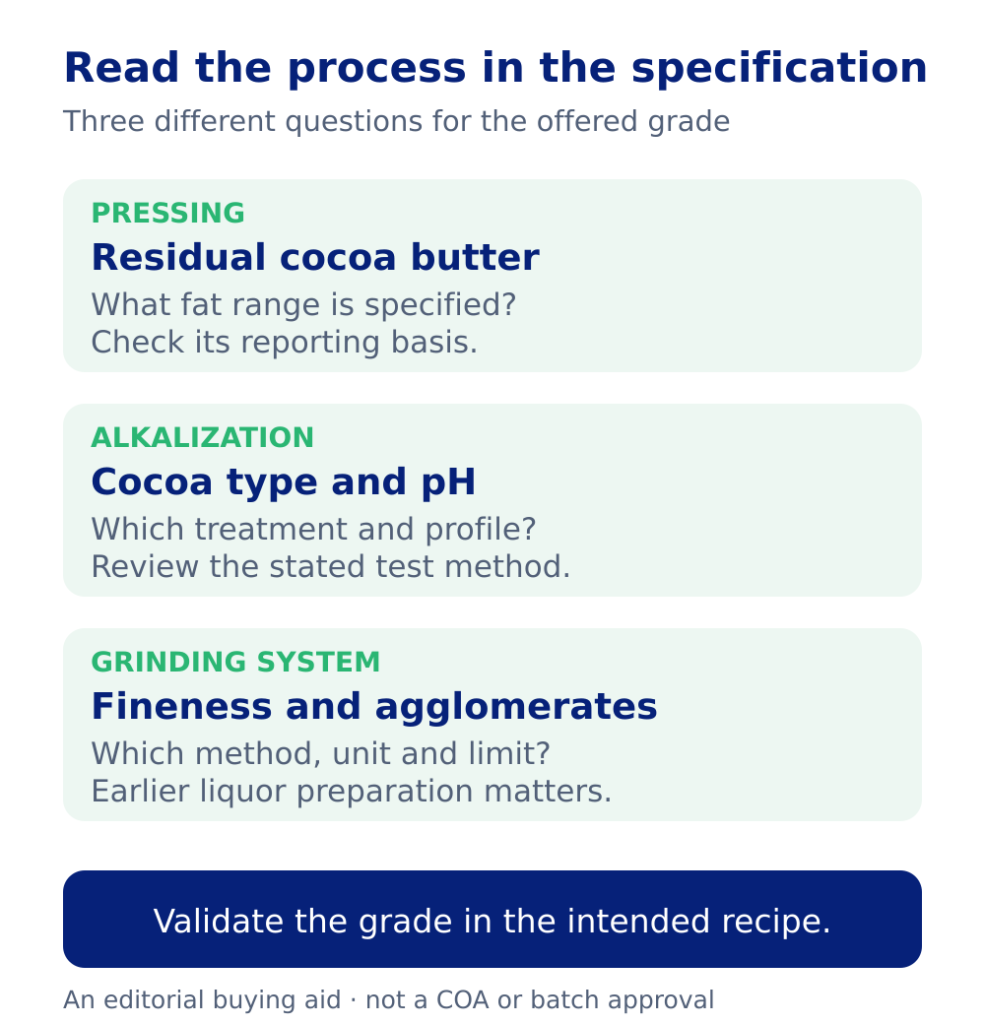
Residual cocoa butter: a number with a manufacturing story
Pressing removes a portion of cocoa butter. The amount remaining is reflected in the resulting powder’s fat content. Guittard’s explanation of cocoa powder variables connects pressing with residual fat and discusses why different applications use different fat levels.
For purchasing, ask for the grade’s stated fat range and its reporting basis. Then check how that grade performs in your formulation. A fat percentage is a useful specification field; the application trial gives it context.
Alkalization: a separate processing choice
A cocoa cake can form part of either a natural or an alkalized powder route. Dutch processing can be applied to different cocoa materials, including nibs, liquor or cake. Its place in the sequence depends on the manufacturing route.
That is why “made from press cake” does not tell you whether a powder is alkalized. Confirm the declared cocoa type and the relevant specification. For a wider introduction to sourcing choices, read Palmart’s article on cocoa powder selection for confectionery.
The grinding system: ask how fineness is defined
The powder-making system breaks down the compact cake, but the earlier preparation of the cocoa liquor also matters to final particle size. The ICCO description notes that cake milling commonly breaks up agglomerates; the final fineness cannot be understood from the last milling step alone.
When comparing offers, ask how fineness or particle size is expressed and measured. Compare like methods and units. A shared word such as “fine” is too broad to establish equivalence between two grades.
Turn the process story into better supplier questions
You do not need to operate a cocoa press to ask a more precise question about the powder. Start with the application requirement, then ask which specification fields describe the offered material.
| Field to clarify | Question for the supplier | How to use the answer |
|---|---|---|
| Ingredient identity | What cocoa type and exact grade or code is being offered? | Match the quotation, sample and technical documents to the same ingredient. |
| Fat content | What is the specified range, and on what reporting basis? | Compare it with the formulation brief and the approved reference. |
| Alkalization and pH | Is the powder natural or alkalized, and how is its pH specified and measured? | Give the technical team the information needed to assess the proposed cocoa type. |
| Fineness | Which particle-size or fineness method, unit and limit are used? | Check that the comparison is meaningful before treating two values as equivalent. |
| Application sample | Which grade and lot does the sample represent? | Connect observations from the trial to the material under discussion. |
| Bulk supply documents | Which specification, batch document and destination-specific documents are available? | Review the proposed shipment against the agreed requirements before acceptance. |
Keep the specification and the batch result distinct. A specification states requirements for the material; a batch document reports the information supplied for that batch. The buyer’s review should establish what has been received, what has been checked and what has been accepted.
One more twist: powder appearance still needs a recipe
Understanding the process gives the sample a backstory. Selection still happens in the product. deZaan’s application guidance distinguishes the colour of dry cocoa powder from its colour after incorporation into a wet medium.
Agree the recipe and process before the comparison. Record the code and lot, use consistent preparation, and assess the finished colour and flavour separately. Add the observations that matter to your product, such as texture, visible particles or mixing behaviour. This turns a memorable manufacturing fact into a repeatable approval conversation.
Quick questions about cocoa press cake
Is cocoa press cake a baked chocolate cake?
No. It is compact material formed during cocoa pressing. The playful name in this story refers to that manufacturing intermediate.
Is cocoa powder simply ground cocoa beans?
That description leaves out an important stage. In the conventional powder route described here, nibs become cocoa mass, pressing separates cocoa butter and cake, and the cake stream is processed into powder.
Does press cake tell me whether the powder is natural or alkalized?
No. Press cake describes an intermediate, while alkalization describes an optional treatment. Check the actual powder’s identity and specification.
Does every powder made from cake have the same fat content?
No. Residual cocoa butter is a grade characteristic. Use the offered powder’s current specification and the relevant batch information when reviewing a purchase.
Choose the powder for the product you are making
Explore Palmart’s cocoa powder portfolio and the alkalized cocoa powder product page. To discuss a Palier cocoa requirement, contact Palmart with the ingredient or grade, your application, expected volume, delivery destination and the documents or sample information you need.
The cake gets no candles. Its next role may be in your production line.
